
- EMOM - Kid's Virtual Mother


Inside An Airplane

Famous Books
August 17, 2020
Inside A Washroom
August 17, 2020
- Airplanes are transportation devices which are designed to move people and cargo from one place to another.
- Airplanes come in many different shapes and sizes depending on the mission of the aircraft.
Parts of Airplane:
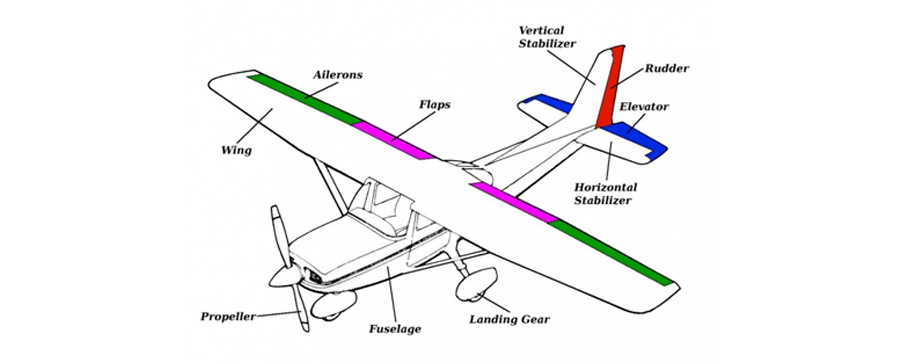
Figure shows a typical airplane with its major components listed.
| Parts | Description |
|---|---|
|
|
1. The ailerons are located at the rear of the wing, typically one on each side. 2. They work opposite to each other, meaning that when one is raised, the other is lowered. 3. Their job is to increase the lift on one wing while reducing the lift on the other. |
|
|
1. The cockpit, or the Flight Deck, is where the pilots sit. 2. It contains the flight controls, which move the airplane, as well as all the buttons and switches used to operate the various systems. |
|
|
1. As the name implies, the elevator helps “elevate” the aircraft. 2. It is located on the tail of the aircraft. 3. It directs the nose of the aircraft either upwards or downwards (pitch) in order to make the airplane climb and descend. |
|
|
1. An airplane has at least one, or as many as eight engines. 2. Its basic function is to take the air that’s in front of the aircraft, accelerating it and pushing out behind the aircraft. |
|
|
1. Flaps are a “high lift / high drag” device. 2. Not only do they improve the lifting ability of the wing at slower speeds by changing the camber, or curvature of the wing. 3. Flaps come in 4 main varieties: plain, split, slotted and fowler. |
|
|
1. It is commonly thought of as “spindle shaped”, the body of the aircraft. 2. It holds the passengers and cargo safely inside. |
|
|
1. The horizontal stabilizer is quite simply an upside-down wing, designed to provide a downward force (push) on the tail. |
|
|
1. A slat is a “high lift” device typically found on jet-powered aircraft. 2. Slats are similar to the flaps except they are mounted on the leading edge of the wing. |
|
|
1. The struts are part of the undercarriage, more commonly known as the landing gear. 2. Their function is theto absorb the impact of the landing as the aircraft touches the ground. |
|
|
1. The vertical stabilizer is designed to stabilize the left-right motion of the aircraft. |
|
|
1. Most aircraft have a minimum of three wheels, larger aircraft require many more to support the immense weight. 2. Aircraft wheels are filled with nitrogen instead of air. |
|
|
1. The wing provides the majority of the lift an airplane requires for flight. |
Aircrew:
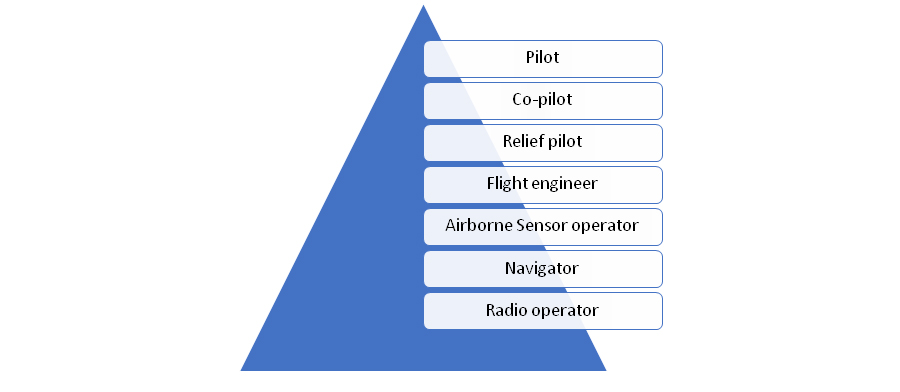
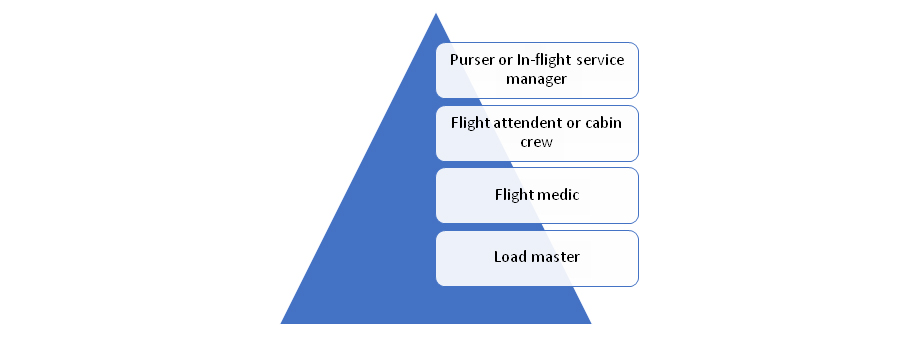
- Aircrew, also called flight crew, are personnel who operate an aircraft while in flight.
- The composition of a flight’s crew depends on the type of aircraft, plus the flight’s duration and purpose.
Let’s see the aircrew members:
1. Flight deck positions:
2. Cabin Positions:
Aircraft Cabin Temperature:
- The air pressure, temperature and quality inside the aircraft needs to be manipulated for human survival.
- At high altitude the pressure is much lower than at ground level.
- The engines drive the system using excess heat and the general idea is to maintain a constant cabin temperature, around 210C.
- The aircraft body is lined with insulation but this is only a few centimeters thick, another reason for needing continuous heating or cooling.
Interesting Facts:
- Planes are designed to be struck by lightning—and they regularly are hit. It’s estimated lightning strikes each aircraft once a year—or once per every 1,000 hours of flight time.
- The FAA says there is no safest seat on the plane, though a TIME study of plane accidents found that the middle seats in the back of the plane had the lowest casualty rate in a crash.
- On long-haul flights, cabin crew can work 16-hour days. To help combat fatigue, some planes, like the Boeing 777 and 787 Dreamliner’s, are outfitted with tiny bedrooms where the flight crew can get a little shut-eye.
- The tires on an airplane are designed to withstand incredible weight loads (38 tons!) and can hit the ground at 170 miles per hour more than 500 times before ever needing to get a retread.
- Plane engines release water vapor as part of the combustion process. When that hot water vapor is pumped out of the exhaust and hits the cooler air of the upper atmosphere, it creates those puffy white lines in the sky.
- Oxygen masks that are deployed when the plane experiences a sudden loss in cabin pressure, only have about 15-minutes’ worth of oxygen.

EMOM
test

